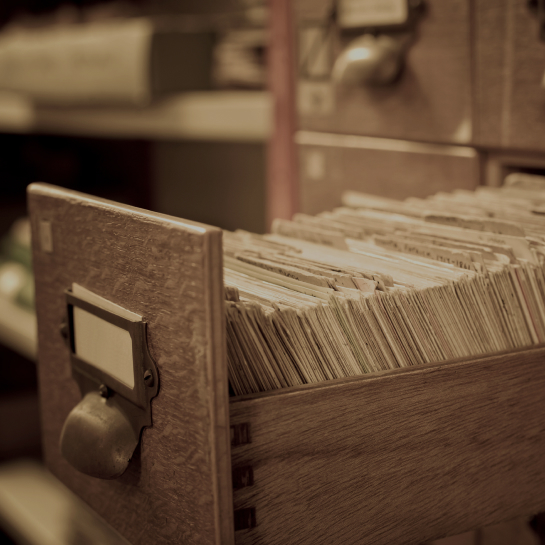
On Tuesday 3rd March this year, the building of the historic archive of Cologne in Germany collapsed. The six-storey building, one of the largest archives in Germany, had over 26km of shelf space containing sixty-five thousand original documents dating from the year 922, as well as more than a hundred thousand maps, fifty thousand posters and five hundred thousand photographs depicting life in Cologne.
Under the Convention for the Protection of Cultural Property in the Event of Armed Conflict (which Germany and nearly 100 other states signed in The Hague in 1954) 870,000 microfilm duplications of the material archived in Cologne had been deposited in a central warehouse in the Black Forest. This microfilming programme demonstrates the importance of backing up vital paper records; if the originals are lost, a copy survives.
Disasters do not only affect historical archives, however; the issue of vital record protection is applicable to all organisations. While the focus of this article is paper records, this is not to imply that other types of record are not important. Rather, paper records are more likely to be affected by a disaster, as they are less likely to be protected by offsite backup procedures. Added to this is the fact that paper files and records are still essential for business continuity in most organisations and in many cases are considered to take legal precedence over electronic versions.
Government departments and agencies have between them vast stores of paper records and files that detail their current and historical actions and decisions. The proper management, control and protection of these records is essential for these departments to meet their regulatory, legislative and administrative obligations.
A disaster can be defined as an occurrence that causes widespread destruction. Disasters can be caused by a number of factors including hazards such as flooding, vandalism, chemical spillage or structural failure. In addition to these once-off events, ongoing conditions of poor storage can lead to the gradual build-up of problems with paper-based records, which are essentially the same in nature as those that occur during a fire or flood. Regardless of the cause, it is possible to recover a large proportion of paper-based records even from the most extreme of conditions.
Having personally been involved in a number of large-scale disaster recovery operations, I have first-hand knowledge of the destruction a disaster can cause to paper-based records. In any disaster recovery operation, there are a number of key stages to follow:
1. Recovery
At this stage, the primary concern is to stabilise the situation to facilitate recovery without causing further damage. The priority is to move unaffected material from the disaster site – for instance in the case of a flood, material on higher shelves may not necessarily be damaged. Stabilisation of the affected material may involve the chilled storage of documents to prevent mould formation on damp or wet material or, where records are already contaminated, freezing material to prevent any spread of contamination.
2. Restoration
The restoration of paper files and documents depends on the original nature of the material, the type of disaster encountered and the future usage of the material. In most cases it is necessary to go through procedures for decontamination, drying and cleaning of the material.
· Decontamination: Chemical solutions, irradiation and submersion in disinfectant aqua solutions are all used in various situations. At this stage, the concern is to eliminate all microbiological infestation and mould spores. This will ensure lasting damage is minimal and leave the documents safe for human use in the future.
· Drying: Air-drying, freeze-drying and vacuum drying are all options for drying records. The method used will depend on the condition and volume of the material.
· Cleaning: The removal of surface dirt such as soot in the case of fire or mould growth in the case of flood or poor storage is essential.
3. Reinstatement
Once the processes of recovery and restoration have taken place the next step is the reinstatement of the material to the record system or collection to which it belongs. Reinstatement involves re-establishing physical and intellectual control over the material and where possible re-establishing the material’s original order or where appropriate establishing a new order.
If your department holds vast quantities of paper files make sure they are stored under appropriate conditions. Even if papers are well-filed, check that digital back-ups of your most important documents have been created. Then, should disaster strike, your department will be well-equipped to deal with it.
Gerard Byrne B.A., H. Dip (Archival Studies) is Archives and Records Manager at Eneclann where he has worked for the last six years across a wide range of projects for public and private sector clients. If your department is interested to find out more about disaster management or digitisation, contact Ger on 01 671 0338 or via email: gerard.byrne@eneclann.ie.